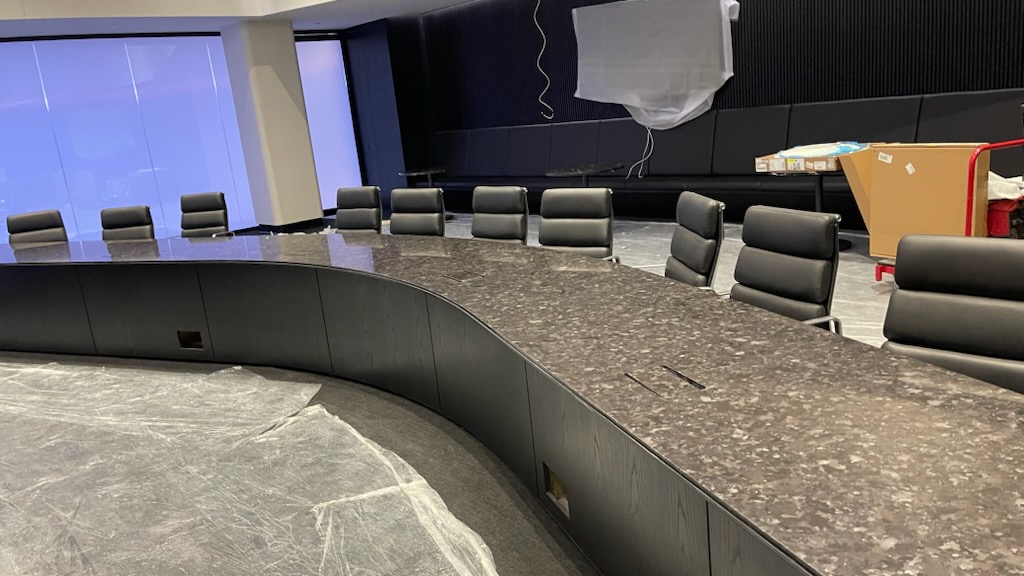
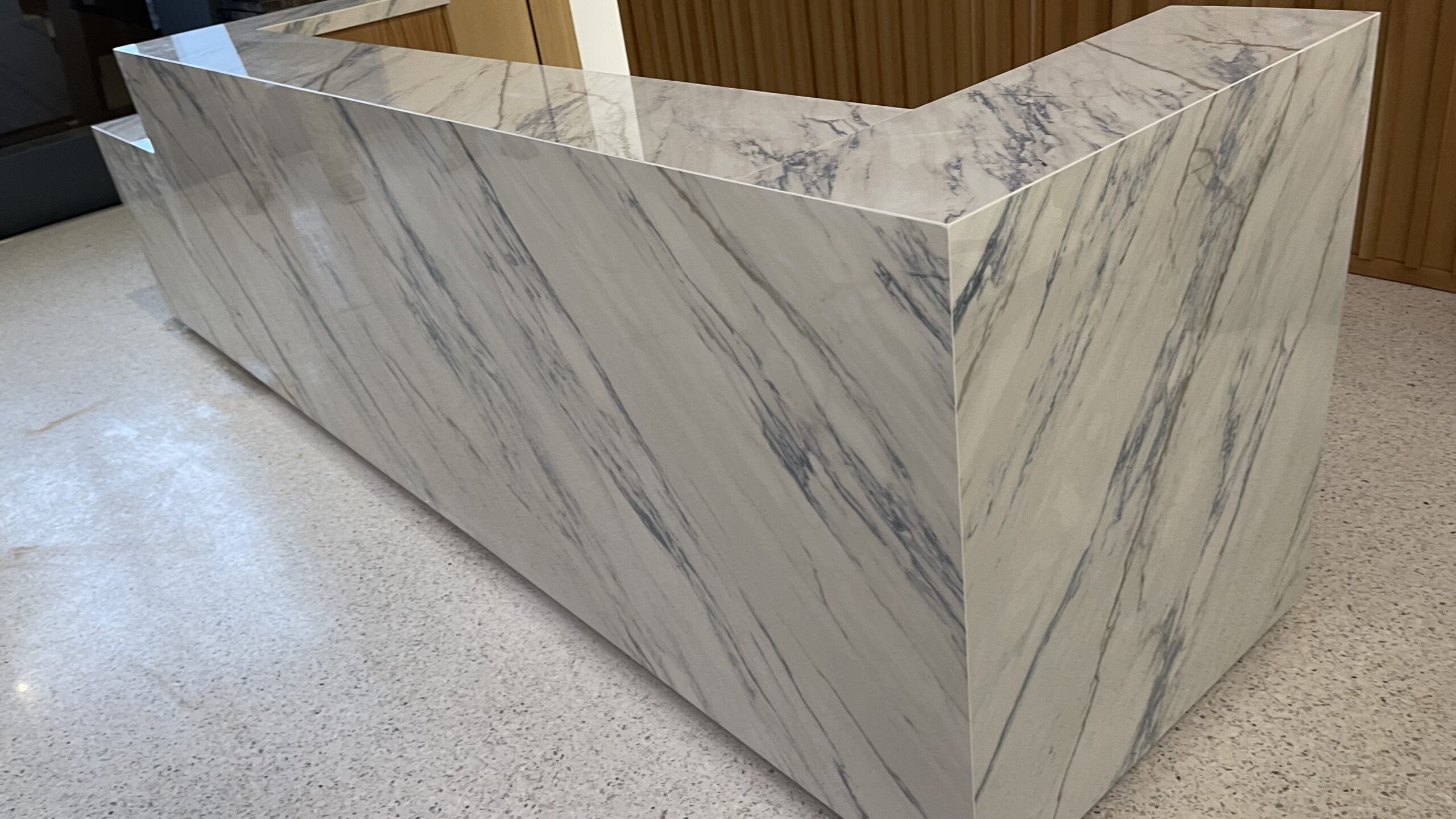
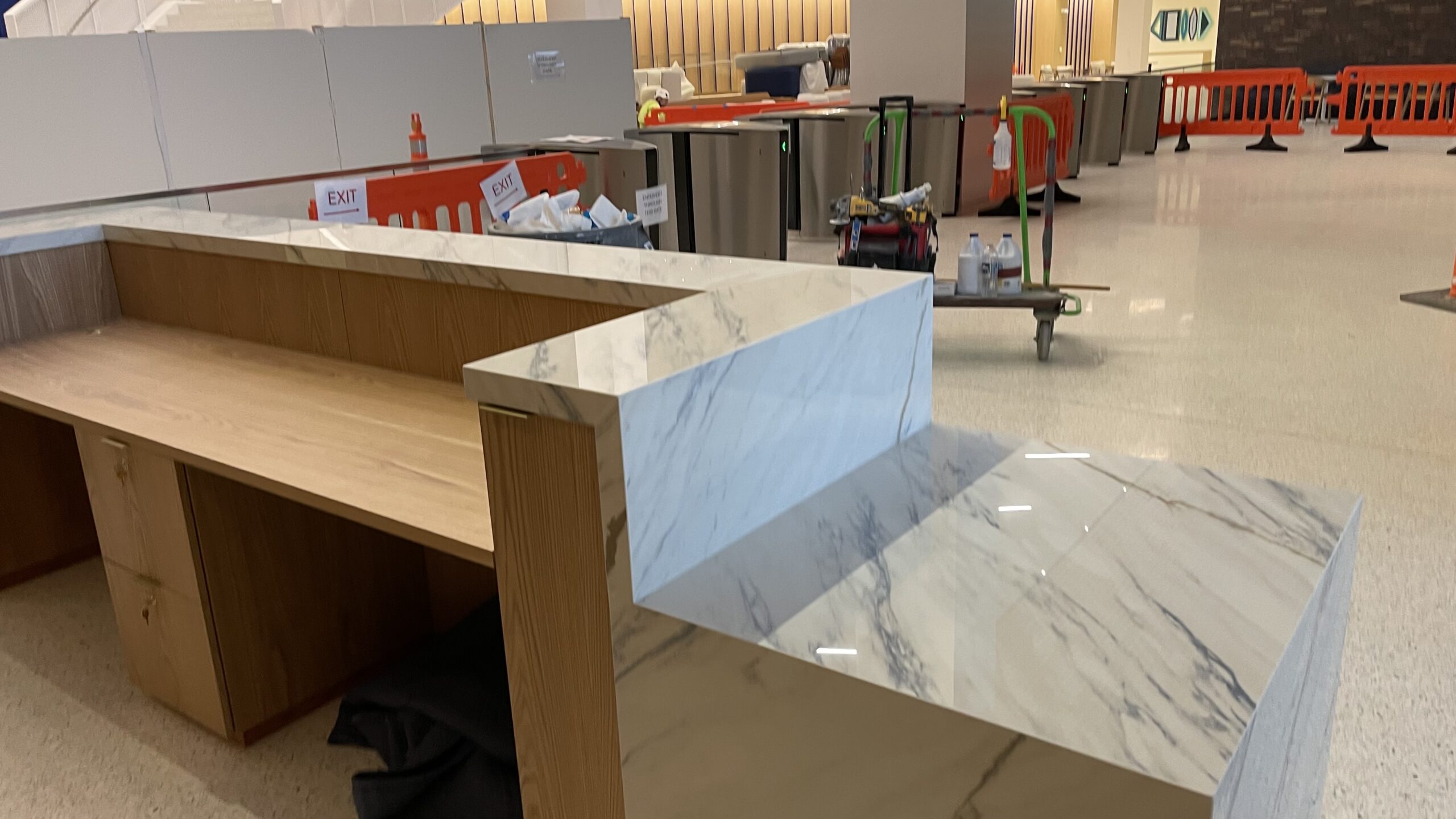
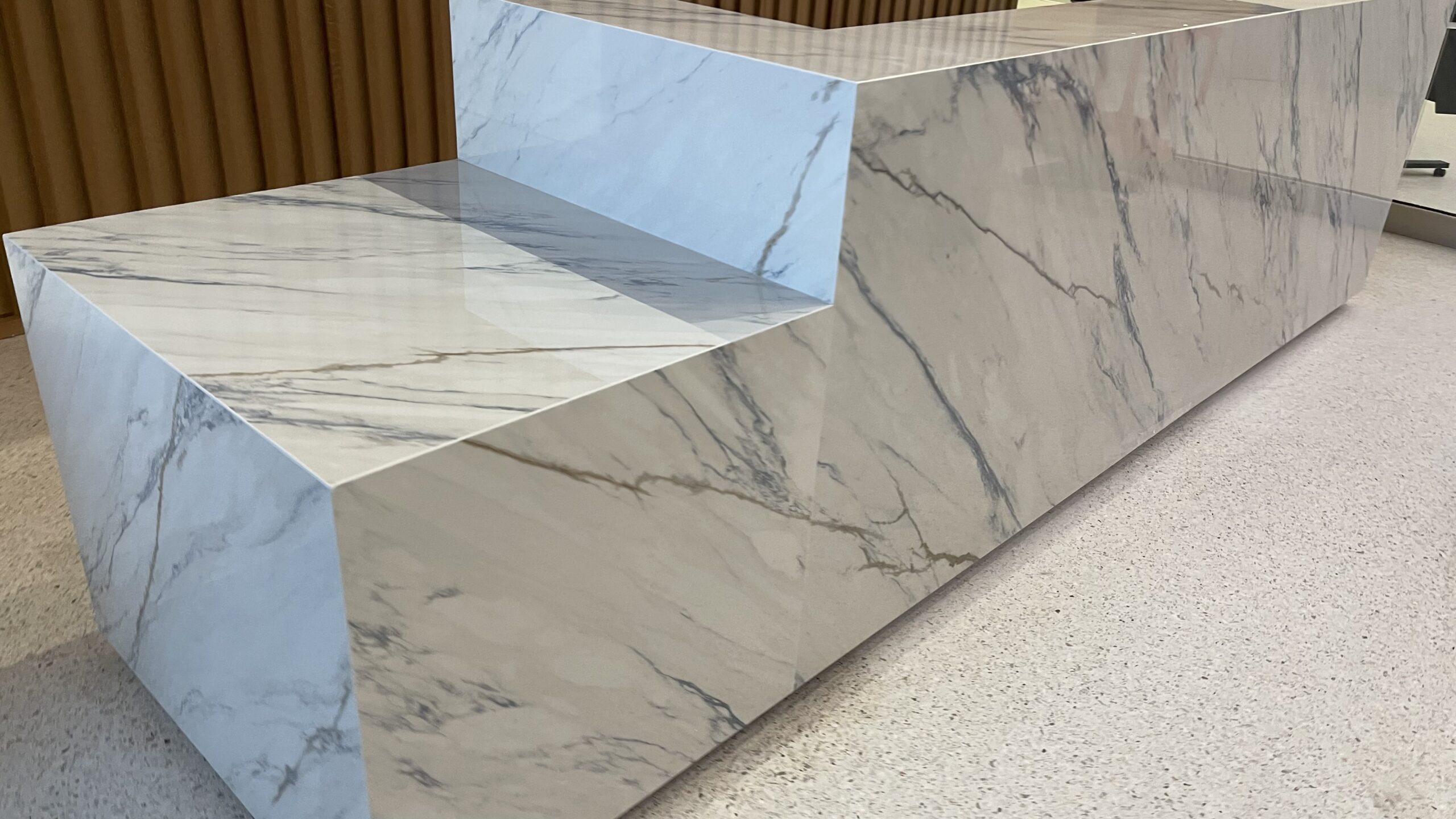
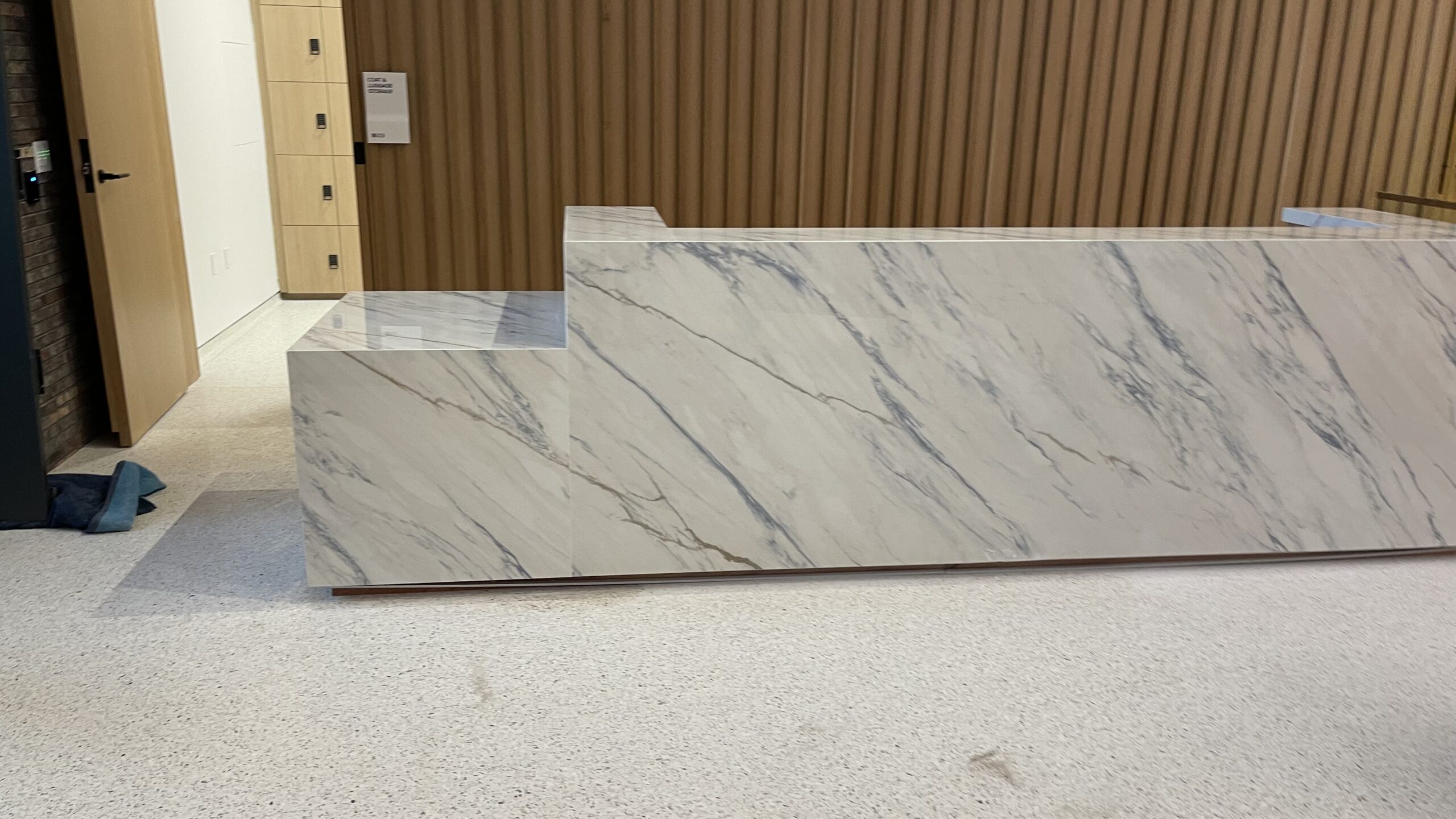
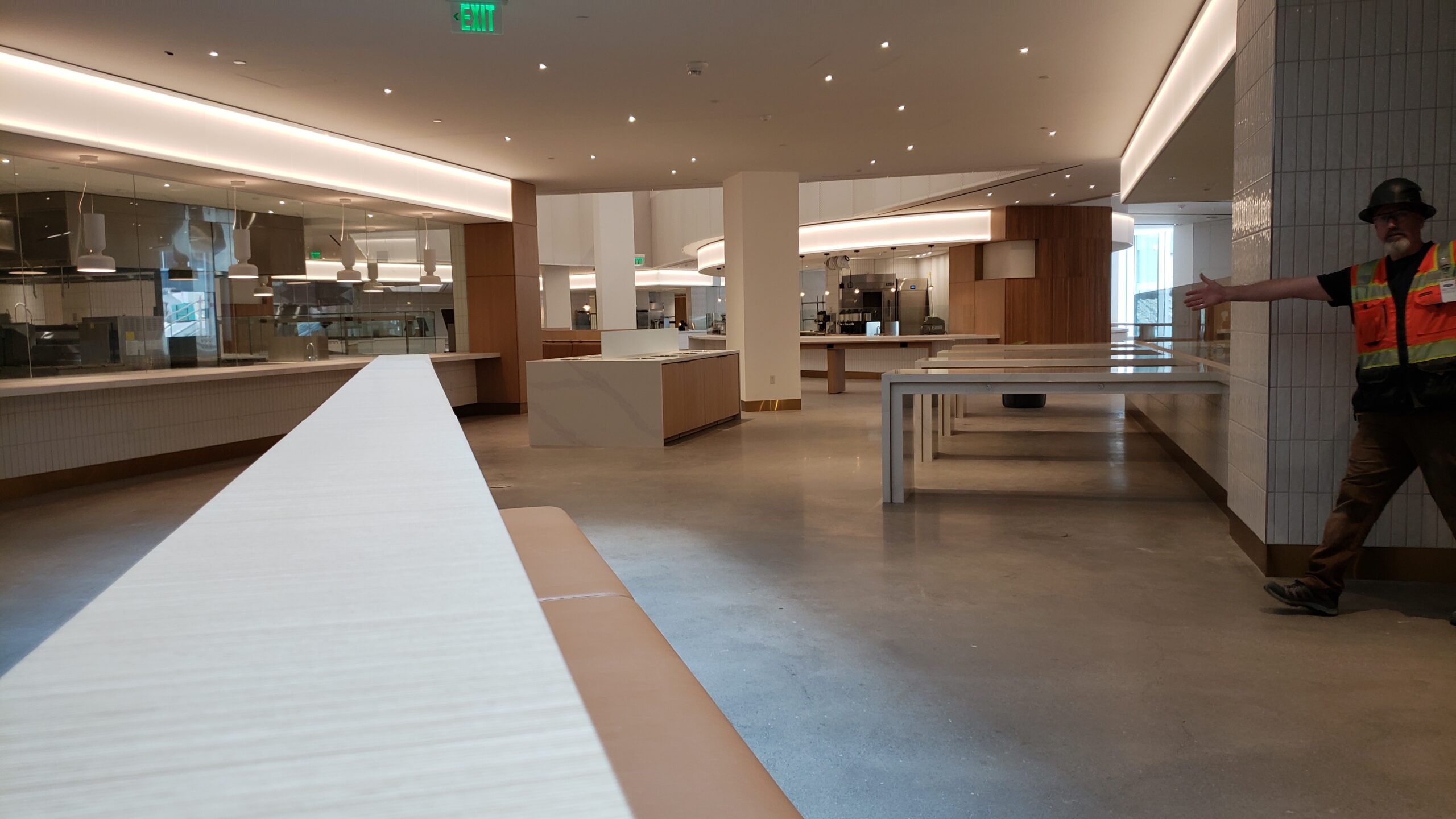
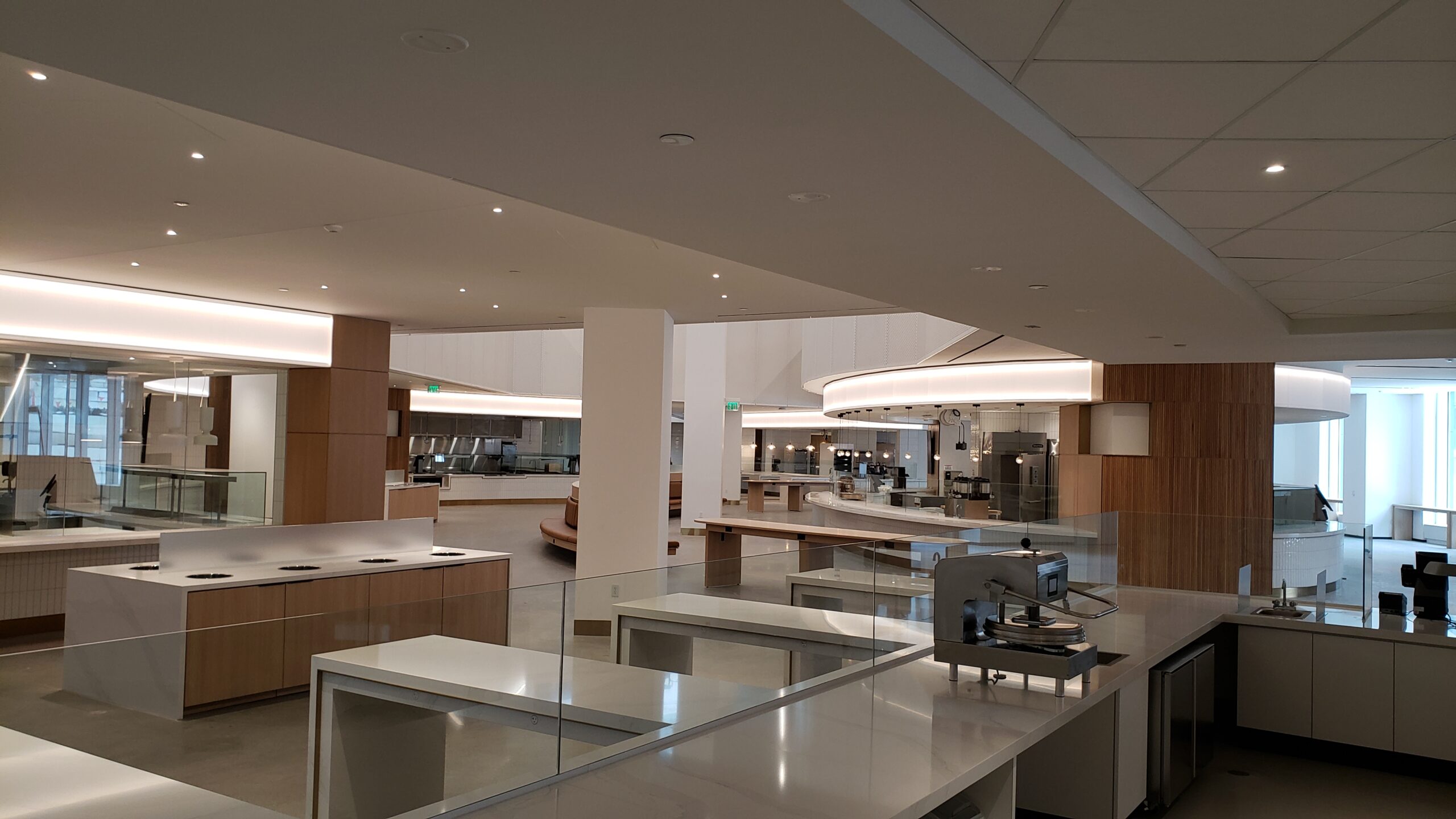
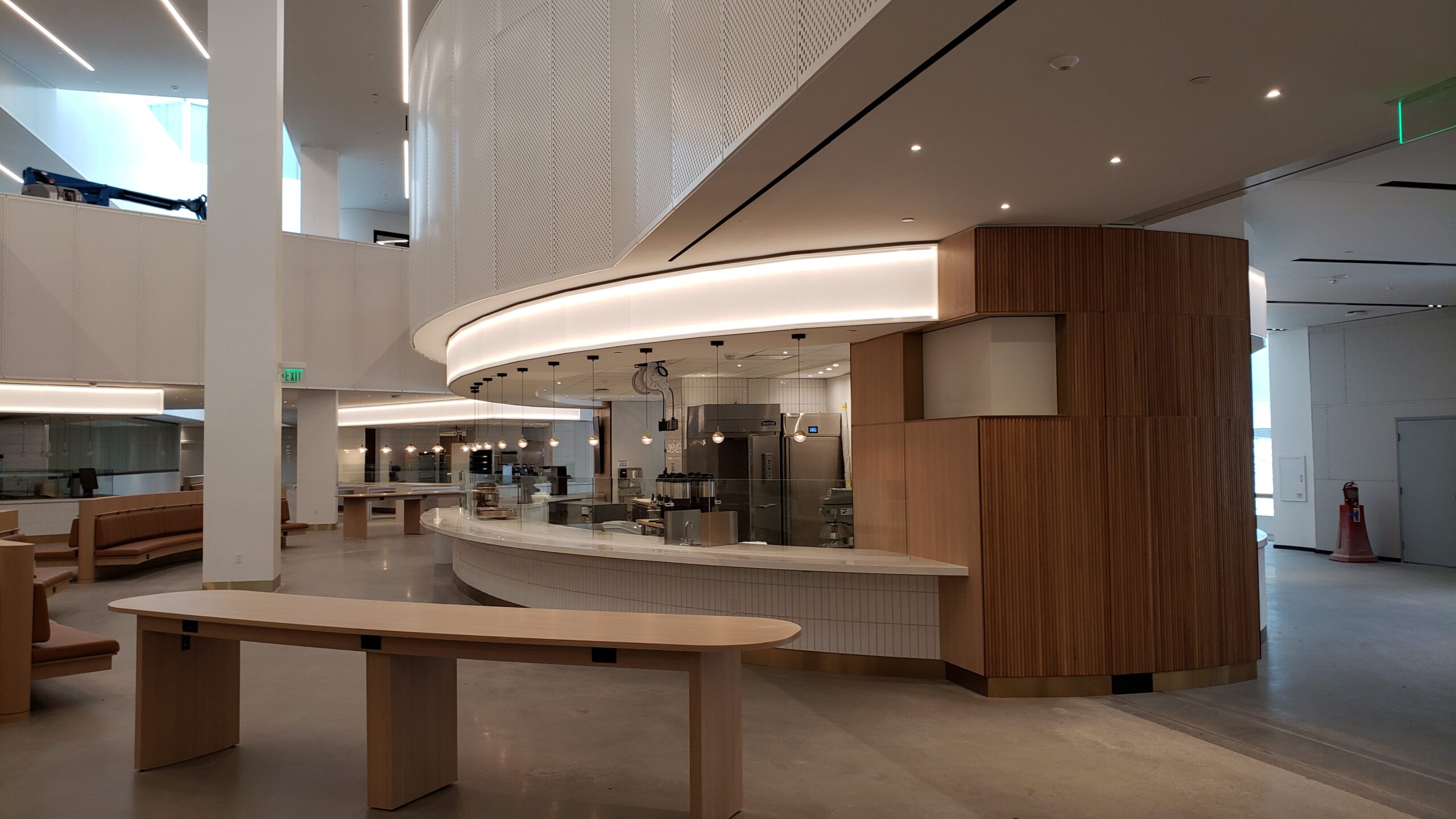
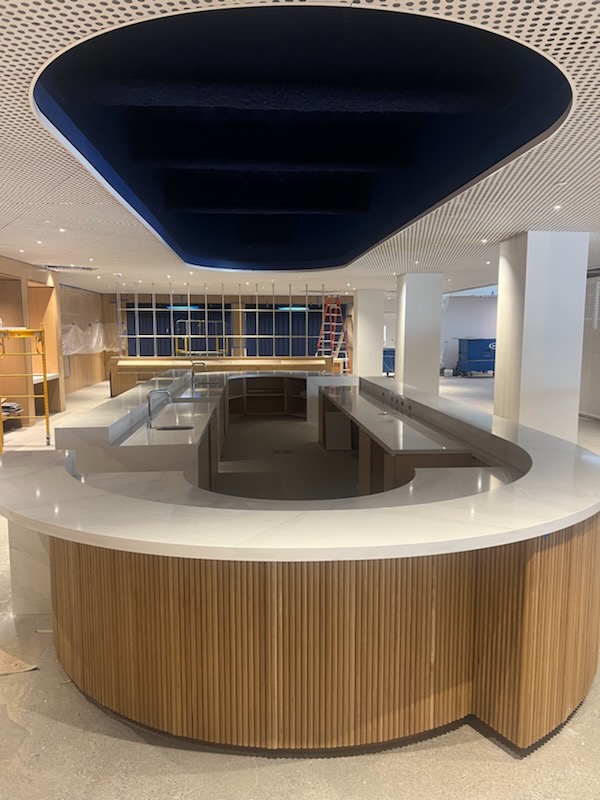
The Ford Hub Design Center project demonstrates large-scale commercial stone installation within a modern automotive campus, where material selection, fabrication consistency, and installation coordination must align to support high-traffic use, collaborative work environments, and long-term durability.
Ford Motor Company’s Central Campus Building is a key component of the transformation of its Research & Engineering Campus, designed to support the future of mobility and a hybrid workforce. The project brings together architecture, engineering, and workplace strategy to create an environment focused on collaboration, flexibility, and innovation.
Designed by Snøhetta with IBI Group and Ghafari, the building emphasizes natural light, open circulation, and shared spaces that encourage interaction. Beyond its architectural vision, the project required coordination across multiple systems and materials to support both performance and design intent at scale.
Project Considerations & Execution
Large-scale corporate environments like the Ford Hub Design Center introduce unique challenges that extend beyond design intent. These spaces must perform consistently across high-traffic areas while supporting both individual work and collaborative use.
For this project, key considerations included:
- Maintaining material consistency across more than 13,000 sq/ft of installation
- Coordinating fabrication and installation within a multi-phase construction environment
- Ensuring durability in shared, high-use workplace areas
- Aligning material selection with both aesthetic goals and long-term performance expectations
Projects of this scale require careful alignment between design, fabrication, and installation to ensure that finishes perform as intended once occupied.
Material Performance & Application
The use of Quartz, Dekton, and Granite reflects the need for materials that balance durability with visual consistency in a modern workplace environment.
These materials were selected to support:
- Resistance to daily wear in high-use areas
- Consistent appearance across large surface areas
- Compatibility with fabrication processes required for precision installation
In environments where multiple teams interact daily, material performance is not just aesthetic—it directly impacts long-term usability.
Coordination & Constructability
Projects within active corporate campuses require a high level of coordination across trades, schedules, and installation conditions.
At the Ford Hub Design Center, this included:
- Sequencing installation alongside other active construction phases
- Coordinating with millwork and specialty partners
- Managing tolerances across multiple material transitions
These factors influence not only how efficiently a project is completed, but how well the finished installation aligns with the original design intent.
Performance & Outcomes
The completed installation supports the broader goals of the Central Campus—creating a functional, durable, and visually cohesive environment for employees and visitors.
Material selection and execution strategies were aligned to ensure:
- Long-term durability in a high-traffic corporate setting
- Consistent finishes across large-scale installations
- Integration with a modern, collaborative workplace design
Projects like this demonstrate how early decisions and coordinated execution contribute to reliable performance over time.
Projects of this scale highlight how early design decisions influence coordination, constructability, and long-term performance. For a deeper look at how these factors shape outcomes, explore our resource on how early design decisions impact coordination, risk, and project outcomes.